A Legacy of Understanding. A Future of Hope.
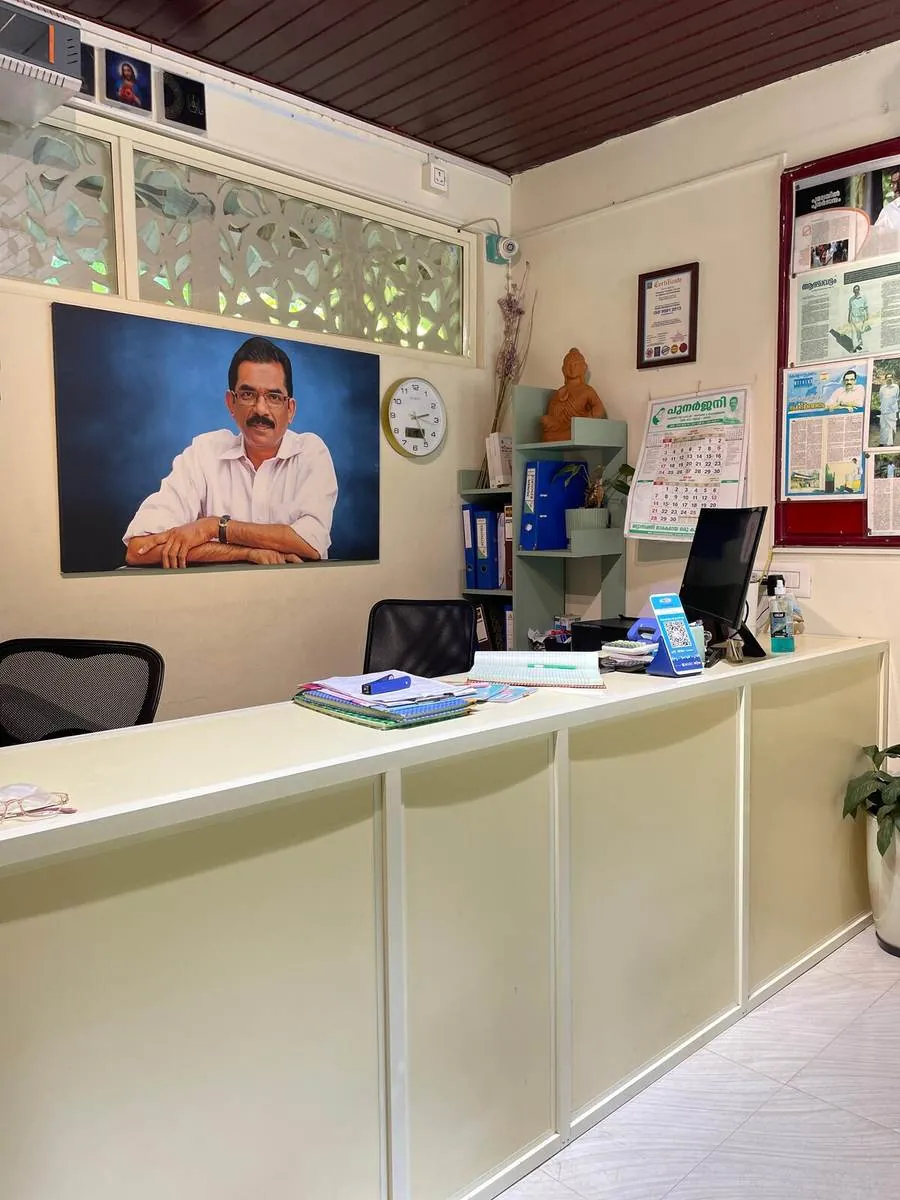
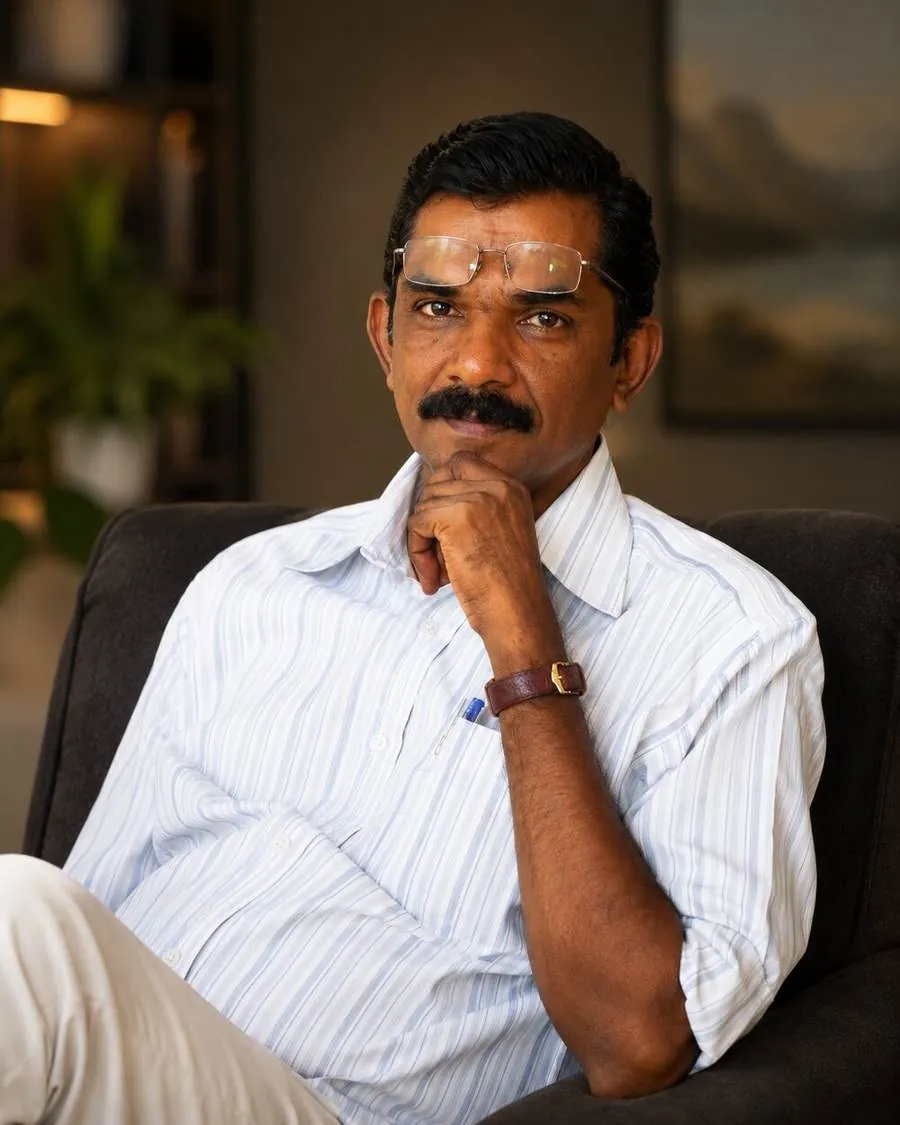
Dr. Johns K. Mangalam founded Punarjjany in 2004, shaped by a deeply personal understanding of alcoholism. His philosophy was rooted in compassion, dignity and the belief that people should never be defined by their struggles. Today his son, Sooraj Johns Mangalam, Managing Director, carries that vision forward.
A brilliant mind, an inherited struggle
Johns K. Mangalam grew up watching his own father live with alcoholism, and by the age of twelve he had taken his first drink himself. What began as a childhood habit deepened over the years into a dependency that would shape — and nearly derail — the next two decades of his life.
Yet his addiction never dulled his mind. He took a BA in Philosophy at Sree Kerala Varma College with first rank in the University of Calicut, and an MA in Philosophy, again with first rank in the University of Calicut, followed by a second master's degree. He held a UGC fellowship, completed a PhD on Gandhi's views on socialism, and took an LLB from Ernakulam Law College, going on to practise at the Thrissur Bar. It was an academic record most people would envy, built while his life was quietly unravelling at home.
Losing everything, one piece at a time
He eventually became a college professor of Philosophy, later serving as Head of the Department of Philosophy at Sree Kerala Varma College, Thrissur, until his retirement — a position he was proud of, and one that alcoholism nearly cost him along the way. For a period, his family survived on his wife Raji's income alone while his own earnings went toward drink. At his lowest point, he took up daily-wage labour in Thrissur simply to fund his next drink.
It was a season of quiet devastation — strained finances, a marriage under enormous pressure, and the slow erosion of the respect he had spent a lifetime earning through his academic achievements.
An insurance form, and a hard truth
The moment that changed everything was an unlikely one. Convinced he was of little use to his family while he was alive, he decided to take out a life insurance policy so they would at least be provided for after his death. The policy required a medical fitness certificate — and to obtain it, he had to stop drinking, if only for a short while.
That blunt honesty landed. It was the moment he first considered that his drinking wasn't a personal failing to be ashamed of, but an illness a person could recover from.
Choosing to live, one difficult day at a time
What followed was not easy. After nearly twenty years of drinking, withdrawal brought severe hallucinations and repeated hospital visits. Raji stood beside him through all of it, even as their attempts to keep his condition private within the community grew harder to sustain. With her support and the doctor's guidance, he learned to understand alcoholism as an illness rather than a moral weakness — a shift in perspective that would later become the foundation of his own approach to supporting others.
He stopped drinking in 1999, at the age of 37. He went on to write about the experience candidly in his Malayalam autobiography, Kudiyante Kumbasaram ("A Drunkard's Confessions").
Founding Punarjjany
In the 1990s, during his own years with alcoholism, Dr. Mangalam went through many of Kerala's de-addiction centres himself. He found none that gave a person the support he actually needed. He came to see the person as someone harmed by a substance, not a wrongdoer, and to be met with love, respect and compassion. In 2004 he founded Punarjjany, a name that means "rebirth", as an alternative and a new vision: a residential recovery centre built around that lived understanding.
Before he built anything, he also visited a number of existing centres around Kerala to see, firsthand, how they treated people like him. What he found did not sit right with him: institutions built more around control than care. He often thought of himself as a wounded healer, someone whose own scars were exactly what let him see what needed to change. He wanted the world to understand what he had learned the hard way: that alcoholism is a family disease, not a personal moral failing, and that with the right support a person can recover and build a meaningful life.
He deliberately built Punarjjany to be unlike the de-addiction centres he had known from the inside and later visited as a researcher. There are no locks, no confinement and no compulsory rituals, and medication is used only when a doctor judges it necessary. In their place he set a structured 21-day residential programme for people who are willing to come, with a spouse or parent staying on campus throughout, daily counselling grounded in his conviction that recovery happens through family, dignity and understanding, not punishment, and residents cooking and eating together.
Over the following years, Punarjjany grew from a single family's conviction into a recovery and rehabilitation centre known across Kerala, touching the lives of more than 20,000 family members, without ever receiving state or central government funding.