Who can be admitted to Punarjjany?
Punarjjany runs a 21-day residential recovery programme for people with mild-to-moderate alcohol dependence or multiple-substance addiction who are willing to come. It is not a typical de-addiction centre. It was founded in 2004 by the late Dr. Johns K. Mangalam, whose own recovery from alcoholism shaped how admissions work here. Read about him on the founder's page.
Severe withdrawal and other serious medical conditions need hospital care, and people in that situation are referred to an appropriately equipped hospital.
Is This Programme Right for You?
The 21-day residential programme is designed for people who:
- ✓
Voluntarily wish to change
They want to change their relationship with alcohol or other substances, and they choose to come.
- ✓
Are willing to join a structured residential programme
They are prepared to live on campus for 21 days, with a family member staying alongside them.
- ✓
Are assessed as medically suitable for the facilities available
The assessment and medical clearance show that their needs can be met safely here.
- ✓
May benefit from understanding and support
Psychological understanding, community support and family involvement may help them.
- ✓
Are willing to follow the routines
They are ready to take part in the daily routine of the programme.
People who need hospital-level treatment, emergency stabilisation or intensive psychiatric care need an appropriately equipped hospital first. This list is not a self-assessment. Final suitability is decided through the professional assessment, and if your family is unsure, please call or WhatsApp us and talk it through.
What Punarjjany does not provide
Punarjjany is a residential recovery setting, not a hospital. There is no ICU on campus, and we do not provide hospital-level emergency treatment, emergency detoxification, medically managed severe withdrawal or inpatient psychiatric care. People who need that level of care are referred to an appropriately equipped hospital, so that they receive the right help first.
Step 1: The first call or WhatsApp message
Call or message +91 97472 01015. The line is open 24 hours a day. You can also reach us on +91 82814 78832 or +91 80896 25077.
The person who needs treatment can make the call. More often it is a wife, parent, brother or sister. You do not need to have everything decided before you call.
Step 2: The assessment conversation
The team will want to understand the situation before suggesting anything. Expect to be asked about:
- ✓
The drinking or substance use
What is being used, roughly how much, and for how long.
- ✓
General health
Any known illnesses, past hospital stays and current medicines.
- ✓
Earlier attempts to stop
Whether the person has tried to stop before, and what happened.
Please answer honestly, including the parts that feel embarrassing. The team needs an accurate picture to tell you whether the programme may be suitable, or whether a hospital should be the first stop. Final suitability is decided through the professional assessment and medical clearance. They will also explain the 21-day programme and the fee.
Step 3: Voluntary consent
This is the step families worry about most. Punarjjany admits people only with their own agreement. There are no locks on campus, no compulsory rituals and no heavy sedation.
That does not mean the person has to be enthusiastic. Willingness to come and to stay is enough to begin. If your family member refuses outright, tell us, and see our family guide to alcohol addiction.
Step 4: Who accompanies the resident
We treat addiction as a family disease, so a spouse or parent stays on campus for all 21 days and takes part in family counselling. Dormitory stay for one accompanying family member is included in the fee, in separate dormitories for men and women.
Decide early who this will be, because that person needs to arrange three weeks away from work or duties at home. If no spouse or parent is available, raise it on the call.
Not sure whether your situation fits? Ask us.
Step 5: What to bring
Life on campus is simple and homely. Both the resident and the accompanying family member will need:
- ✓
Clothes for 21 days
Comfortable everyday clothing, including something suitable for morning yoga.
- ✓
Toiletries
Soap, toothbrush, towel and other basic personal items.
- ✓
Current prescriptions and medicines
Medicines being taken for other conditions, with the prescriptions, for the doctor to review.
- ✓
Medical records
Recent test reports, discharge summaries or doctors' letters, if you have them.
- ✓
ID proof
An identity document for the resident and for the family member who is staying.
This is a general guide. The team confirms the exact list on the call before you travel.
Step 6: Arrival day
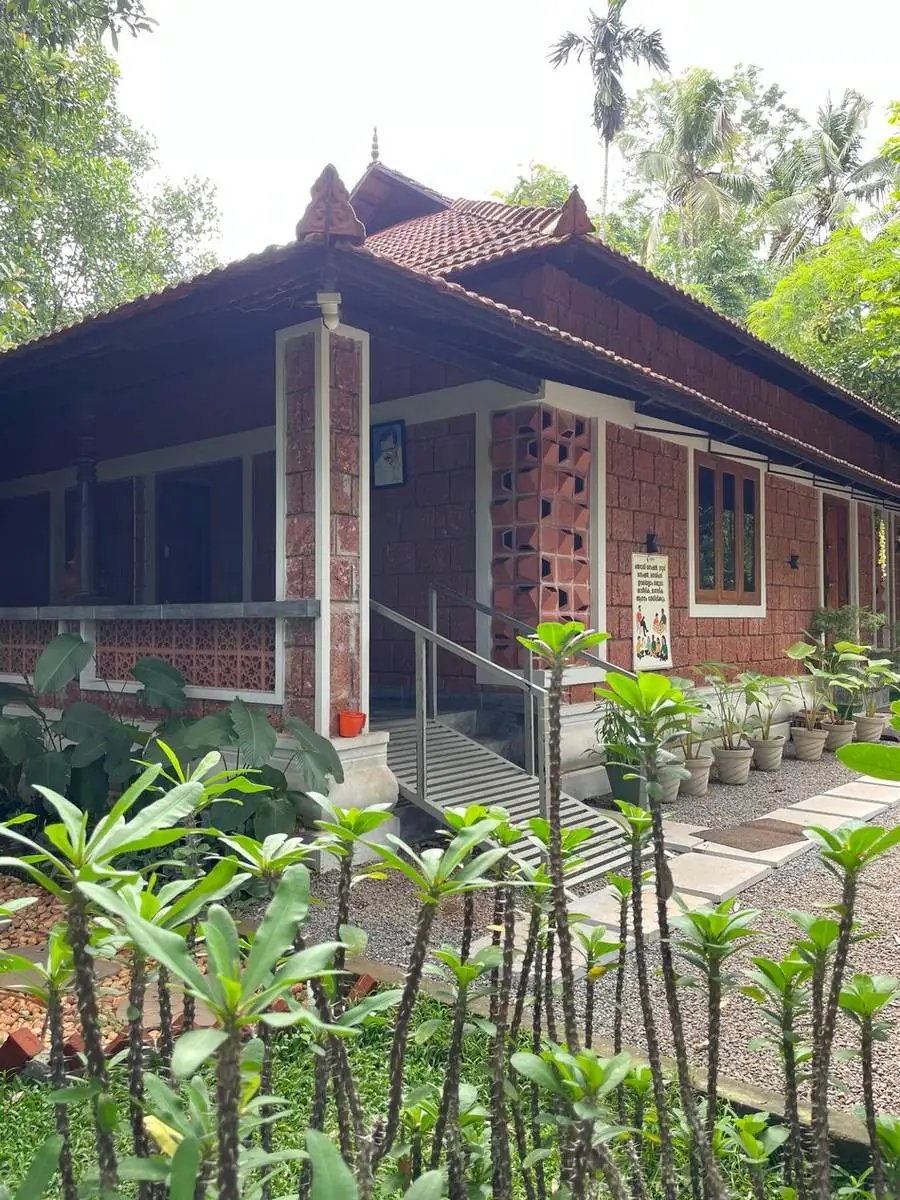
Come on the day agreed with the team. The campus is at Dr. Johns K. Mangalam Road, Poomala PO, Thrissur, Kerala 680581, about 12 km from Thrissur town. See it on Google Maps.
The resident has a medical assessment in person, and admission is confirmed after medical clearance. Medical practitioners, a psychiatrist, psychologists and Ayurvedic practitioners are engaged through consultations and scheduled visits, according to each person's needs and assessment. Medication is used only when a qualified doctor judges it necessary.
The fee is ₹45,000 for the 21 days. What that covers, and what it does not, is set out on the fees page.
Step 7: The 21 days
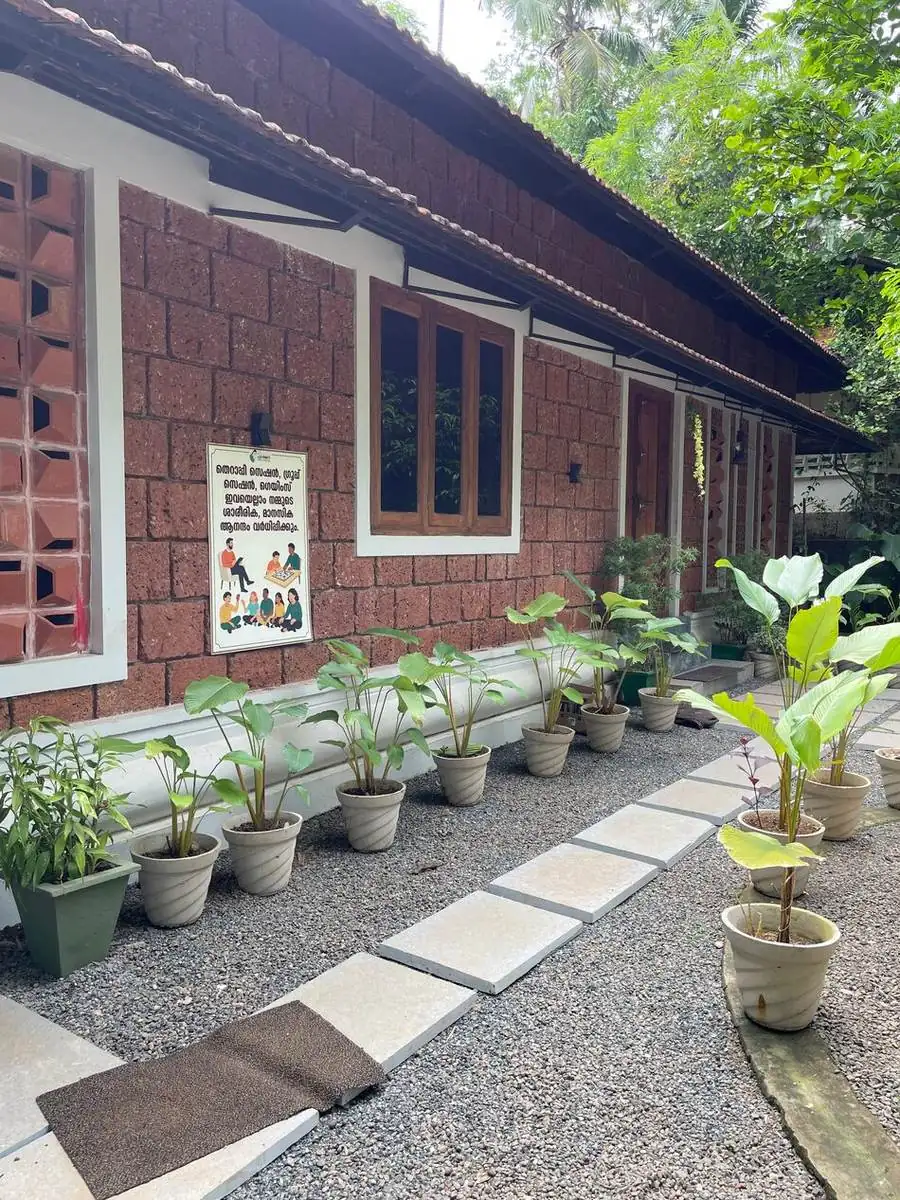
The resident and family member join a steady daily routine, which may include yoga and pranayama, Ayurvedic therapies, psychoeducation classes, individual counselling, group therapy and family counselling, according to individual assessment. Residents and family members cook together in the shared kitchen, and a recorded class by the founder is played every evening at 7 PM.
For more on the approach, see our Thrissur campus page.
Step 8: Discharge and 12-month follow-up
Each resident leaves with a personal recovery plan built during counselling, covering their own triggers, coping skills and relapse prevention.
Twenty-one days is the length of the programme, not a promise of permanent recovery. It is a beginning, not a finish line, and follow-up support continues for 12 months after discharge.
Admission for families abroad and Malayalam speakers
If you live abroad and are planning treatment around a trip home, read our page for NRI and Gulf Malayali families. For relatives who prefer Malayalam, share our Malayalam page.
Admission questions families ask us
How do I admit someone to a de-addiction centre in Kerala?
At Punarjjany, start with a call or WhatsApp message to +91 97472 01015. The team will ask about the situation, explain the 21-day programme and fee, and agree an admission day. The person must be willing to come, and admission is confirmed only after a suitability assessment and medical clearance.
Can I admit my husband or son without his consent?
No. Punarjjany takes voluntary admissions only, and nobody is brought in by force. If he is refusing treatment, you can still call us yourself, and our team can suggest ways of talking to him about getting help.
What should we bring for a 21-day stay?
Bring clothes for 21 days, toiletries, current prescriptions and medical records, and ID proof. The team confirms the exact list on the call before you travel.
Who should accompany the resident?
A spouse or parent stays on campus for all 21 days and takes part in family counselling. Dormitory stay for one accompanying family member is included in the fee.
How much does admission cost?
The fee is ₹45,000 for the 21-day programme. It covers the resident's stay and meals, dormitory stay for one accompanying family member, medical assessment, counselling, group therapy, family counselling, Ayurvedic therapies, yoga and meditation, classes and community living. Laboratory tests, medicines prescribed by the doctor, outside hospital care, and travel and personal expenses are not included.
What if the person has severe withdrawal symptoms?
The programme is for mild-to-moderate alcohol dependence or multiple-substance addiction. Punarjjany has no ICU and does not provide emergency detoxification or medically managed severe withdrawal, so people with severe withdrawal are referred to an appropriately equipped hospital. If someone is in immediate danger, take them to the nearest hospital first.