Can Ayurveda treat alcohol addiction?
Kerala is known for Ayurveda, so it is natural that families ask whether Ayurveda for alcohol addiction can work by itself. Our honest answer is no. Alcohol dependence is a medical and psychological condition, and stopping after long, heavy drinking can be medically serious. It needs a doctor's assessment, and usually counselling and family support as well.
What Ayurveda can offer is supportive care: therapies that many people find calming while that medical and psychological work goes on. In our 21-day residential programme, Ayurvedic therapies are one part of the routine. Medical practitioners, a psychiatrist, psychologists and Ayurvedic practitioners are engaged through consultations and scheduled visits, according to each person's needs and assessment, and counselling continues alongside. Ayurveda does not replace any of this.
We do not claim that Ayurveda cures addiction or removes withdrawal. Research on these therapies in addiction is still limited, and we would rather say that plainly.
Which Ayurvedic therapies are part of the programme?
Four classical Kerala therapies may be included at Punarjjany. An Ayurvedic practitioner decides which are suitable for each resident, and when, according to individual assessment.
Shirodhara (Dhara)
In Shirodhara, a thin, steady stream of warm herbal oil is poured over the forehead while the person lies still. Many people describe it as deeply relaxing, which is welcome in the first weeks without alcohol.
Abhyangam
Abhyangam is a full-body massage with warm oil. For someone who has neglected their body for years, it can be a first step towards looking after it again.
Nasyam
Nasyam is the giving of medicated oil through the nostrils, usually after a gentle massage of the face and neck. It is a traditional therapy for the head region and is done only under an Ayurvedic practitioner's direction.
Uzhichil
Uzhichil is a traditional Kerala herbal-oil massage of the whole body. Like Abhyangam, it is used for physical relaxation and general well-being.
How do yoga and pranayama help in recovery?
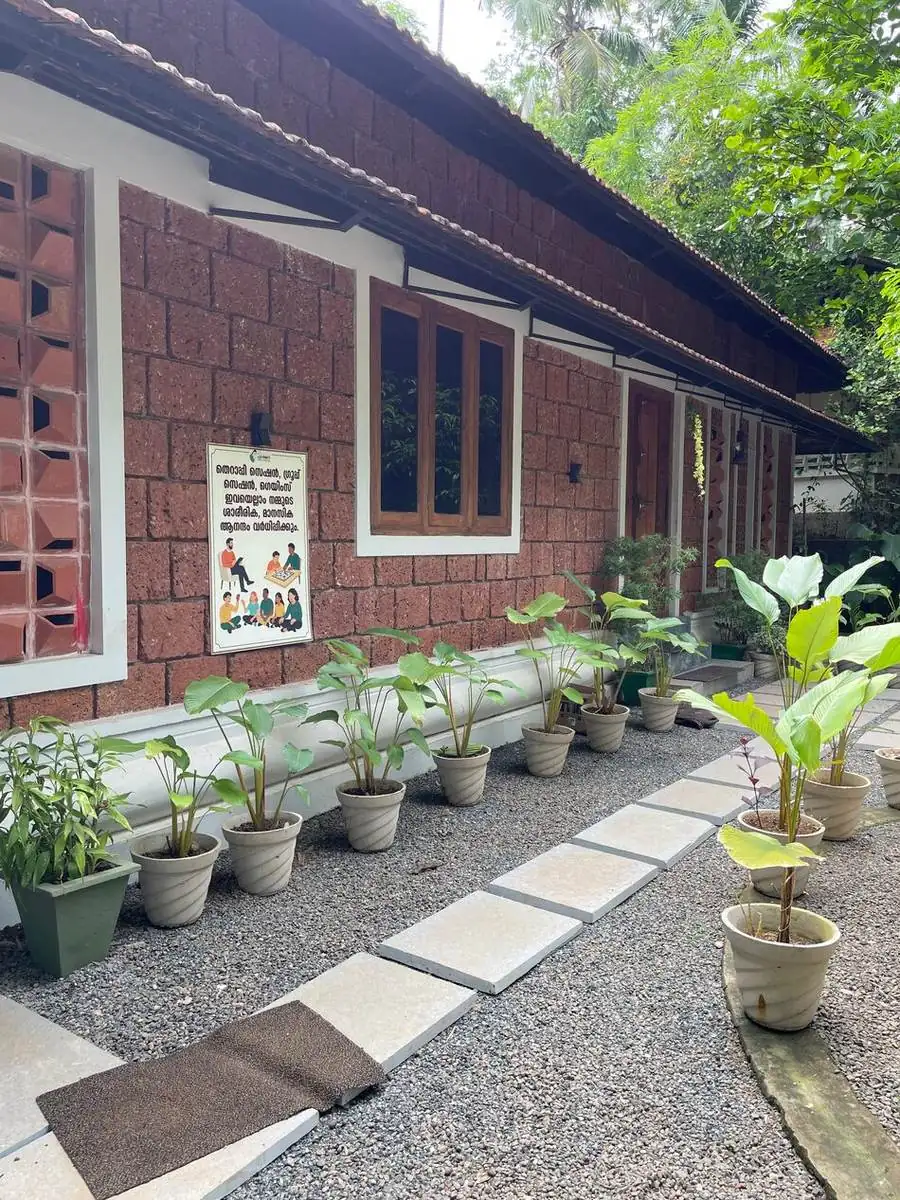
Every day at Punarjjany includes yoga and pranayama, led by a yoga teacher. The postures are gentle. Pranayama is the practice of slow, deliberate breathing.
Neither is a treatment for dependence. Their value is practical. They give the day a steady start, offer a simple way to settle when tension rises, and can be continued at home without equipment or cost.
Not sure whether this approach suits your family member?
Tell us briefly what they are using and for how long. We will explain how medical consultations, counselling and the therapies work together.
Why is Ayurveda never used alone here?
Because the risks are medical. When a heavy drinker stops, the body can react strongly, and in some people that reaction is dangerous. An oil therapy cannot assess or manage that. A doctor can assess it, and serious withdrawal needs hospital care.
So the order at Punarjjany is always the same:
- ✓
Medical assessment comes first
Each person has a medical assessment and medical clearance before admission, and psychiatric consultation is arranged according to individual assessment. The professionals decide what is safe.
- ✓
Medication only when it is needed
Medication is used only when a qualified doctor judges it necessary, and there is no heavy sedation.
- ✓
Referral to a hospital when it is safer
People with signs of severe withdrawal or serious illness are referred to an appropriately equipped hospital.
- ✓
Counselling does the long-term work
Individual counselling covers motivation, triggers, coping skills, emotional regulation and relapse prevention.
- ✓
Ayurveda supports all of this
Therapies are added around the medical and counselling plan, as advised by an Ayurvedic practitioner.
You can read about each role on our team page. If a centre offers Ayurvedic de-addiction treatment in Kerala with no doctor or psychiatrist involved, ask how withdrawal is monitored and what happens in an emergency. Our guide to de-addiction centres in Kerala lists more questions worth asking.
What Punarjjany does not provide
Punarjjany is a residential recovery setting, not a hospital. There is no ICU on campus, and we do not provide hospital-level emergency treatment, emergency detoxification, medically managed severe withdrawal or inpatient psychiatric care. People who need that level of care are referred to an appropriately equipped hospital, so that they receive the right help first.
What does the Ayurvedic part of a day look like?
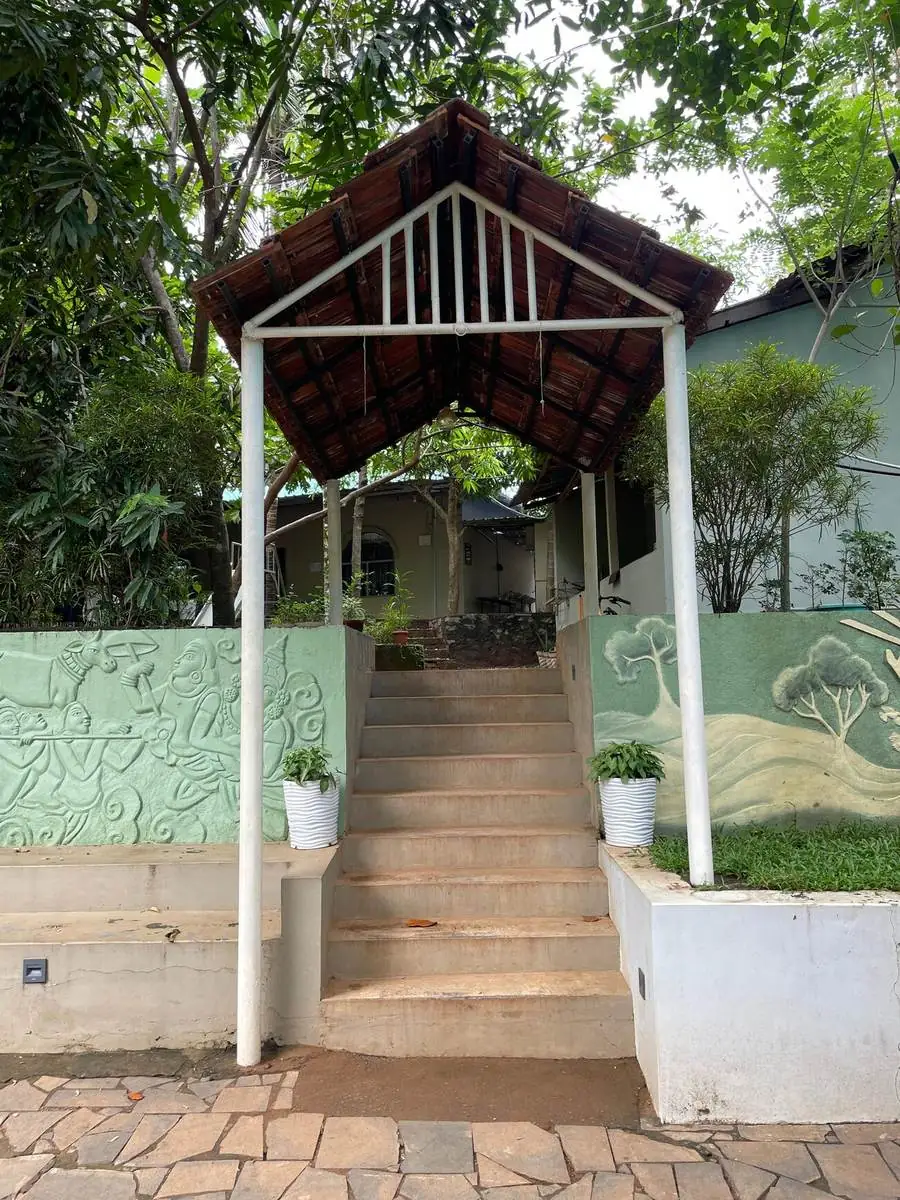
Punarjjany stands beside the Poomala dam, about 12 km from Thrissur town. There are no locks and no compulsory rituals, and admission is voluntary only.
A typical day begins with yoga and pranayama. Ayurvedic therapy sessions are fitted around counselling, group therapy and psychoeducation classes. Residents and their family members cook together in a shared kitchen, which is part of the therapy too. At 7 PM each evening, a recorded class by our founder is played for everyone.
That founder, the late Dr. Johns K. Mangalam, was himself a recovered alcoholic. He built the programme in 2004 on the view that addiction is a family disease, which is why a spouse or parent stays on campus for all 21 days and joins family counselling. Our family guide to alcohol addiction is written for that family member.
Who is this programme for, and what does it cost?
The programme is for adults with mild-to-moderate alcohol dependence or multiple-substance addiction who agree to come. It applies equally to people seeking alcohol de-addiction in Thrissur and those looking for drug rehabilitation in Kerala.
All Ayurvedic therapies, yoga and pranayama are included in the single fee of Rs 45,000 for 21 days. There is no separate charge per therapy. The full list of what is and is not covered is on our fees page.
Not every therapy suits every person, so tell us about existing health conditions and regular medicines when you call. More about the centre is on the Punarjjany home page.