If you have been searching for a de-addiction centre for someone you love, you will have found many kinds of help. Some are hospitals. Some are live-in programmes. Some are doctors, counsellors or groups that meet once a week. They are not the same, and they are not meant for the same people.
This guide explains the main levels of support, who each is for, and where Punarjjany fits.
Different people need different levels of care
Dependence does not look the same in every person. One person has been drinking heavily for years and has other health problems. Another is physically well but cannot seem to stop. Each needs something different.
The safest way to choose is to start with a doctor. A doctor's assessment looks at physical and mental health, how much and how long the person has been using, and any risk during withdrawal.
A simple rule: let a doctor's assessment, not a brochure or a website, decide the level of care.
The main levels of support
Hospital-based detoxification
This is medical care in a hospital to help a person stop drinking or using safely. Doctors and nurses watch the person closely during withdrawal and can act quickly if problems appear. It is for people at risk of severe withdrawal, including those who have had fits or severe confusion when stopping before, and people with other serious illness. It is usually short. It is the first step, not the whole of recovery. You can read more in When Is Hospital-Based Detoxification Necessary?
Residential rehabilitation services
These are live-in programmes where a person stays for some weeks or longer, away from daily pressures and triggers. The day is built around counselling, group work and routine. They are usually for people who are medically stable and need time away to rebuild their lives. Programmes differ a great deal, so it is worth asking questions.
Psychiatric treatment
A psychiatrist is a medical doctor who specialises in mental health. Some people who struggle with alcohol or drugs also live with low mood, anxiety or other mental health conditions. Psychiatric care may be given in outpatient visits or, when a person is very unwell, in a hospital. It can run alongside other support.
Psychological counselling
Counselling is talking therapy with a trained psychologist or counsellor. It helps a person understand why they drink or use, recognise triggers, manage cravings and stress, and plan for difficult moments. It is often done as regular sessions while the person lives at home. It suits milder problems, and it is useful as continuing support after any programme.
Community-based support groups
These are groups of people in recovery who meet regularly to support one another. Mutual-help fellowships such as Alcoholics Anonymous are one example, and there are groups for families too. They are not medical care, but they offer company and encouragement over the long term.
Residential wellness and recovery programmes
These are calmer, non-hospital, live-in settings that bring together counselling, a daily routine, family involvement and practices such as yoga and Ayurveda. They are for people who are medically stable, whose dependence has been assessed as mild to moderate, and who are willing to take part. They are not suitable for severe withdrawal, medical emergencies or acute mental illness.
Many people use more than one
These levels of care are not rivals. A person may need hospital care first, then a residential programme, then counselling and a support group at home. Where there is any risk during withdrawal, medical safety comes first.
Where Punarjjany fits
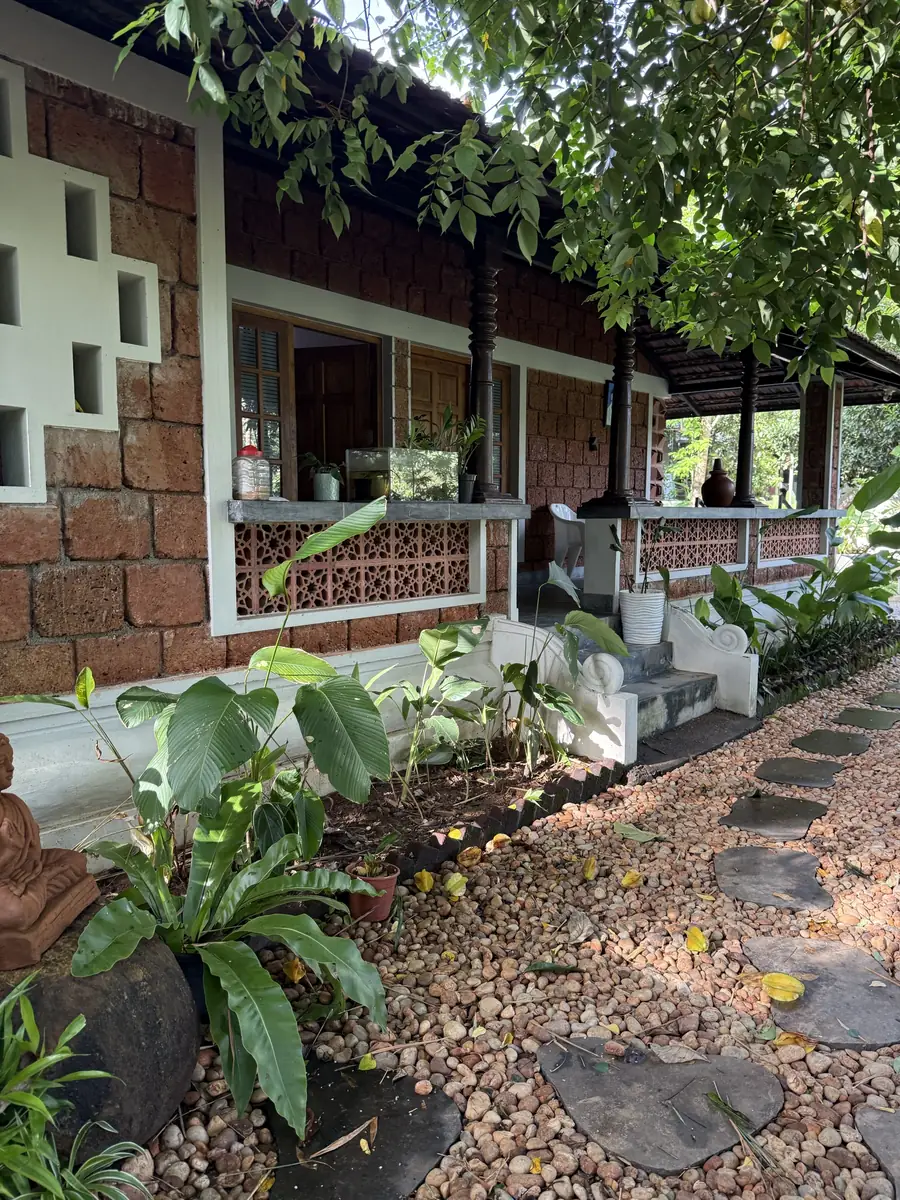
Punarjjany is a holistic recovery and rehabilitation centre in Poomala, Thrissur. It is not a typical de-addiction centre, and it is not a hospital. It offers a voluntary, family-supported, 21-day residential recovery programme for people with mild to moderate alcohol or substance dependence who are willing to come and who have been assessed as medically suitable.
- Admission is voluntary, and only after a suitability assessment and medical clearance. The professionals decide whether the programme is suitable.
- Medical practitioners, a psychiatrist, psychologists and Ayurvedic practitioners are engaged through consultations and scheduled visits, according to each person's needs and assessment.
- The programme may include counselling, group therapy, family counselling, Ayurvedic therapies, yoga and meditation, classes and community living, according to individual assessment.
- One family member can stay on campus in a dormitory and take part in family counselling.
- There are no locks.
Punarjjany has no ICU. It does not provide hospital-level emergency treatment, emergency detoxification, medically managed severe withdrawal or inpatient psychiatric care. People who need that level of care are referred to an appropriately equipped hospital. Twenty-one days is the length of the programme, not a promise of permanent recovery.
Read more about the programme, admission, fees and what is included, and our guide for families.
Questions to ask any centre, including us
- Is admission voluntary, and is the person free to leave?
- Who assesses the person before admission, and who decides whether the programme is suitable?
- Which professionals are involved, and how often will they see the person?
- What happens in a medical emergency, and to which hospital would the person go?
- Which conditions or situations does the centre not accept?
- How is the family involved?
- What does the fee include, and what is charged separately?
- What support is there after the person goes home?
- May we visit before deciding?
We are happy to answer every one of them.
Not sure which level of care is right?
Call Punarjjany to talk the situation through and ask whether an assessment for the programme makes sense. The line is open 24/7 and the conversation is confidential.
Call +91 97472 01015Our details are on the contact page, and there are more resources and articles for families.
This page is general information, not medical advice. In an emergency, go to the nearest hospital.